










Key Takeaways
- A portable vehicle safe is a lockable welded-steel box that secures a handgun, laptop, tablet, or documents and moves with you from one vehicle to the next.
- Tuffy’s pistol and tablet safes secure without drilling: wrap the included 2 ft steel cable around a seat frame or other structural point, then lock the safe.
- One portable safe can work across several vehicles, either by moving the cable tether or by adding an extra mounting sleeve in each vehicle for the Valuables Tote.
- Tuffy portable safes use mechanical keyed or combination locks, so there are no batteries to replace and no electronics to lose power or fail in extreme heat or cold.
Plenty of drivers don’t keep one vehicle long enough, or drive one vehicle often enough, to justify a permanent install. You might share two cars at home or pick up a rental on a work trip. Some days you carry a work laptop and a handgun. Portable and universal vehicle safes give that carry a steel home in whatever you’re driving.
This guide explains how Tuffy portable safes compare with universal and vehicle-specific options. It covers sizing, securing a safe with little or no drilling, locks, travel, and when to upgrade.
What Is a Portable Vehicle Safe?
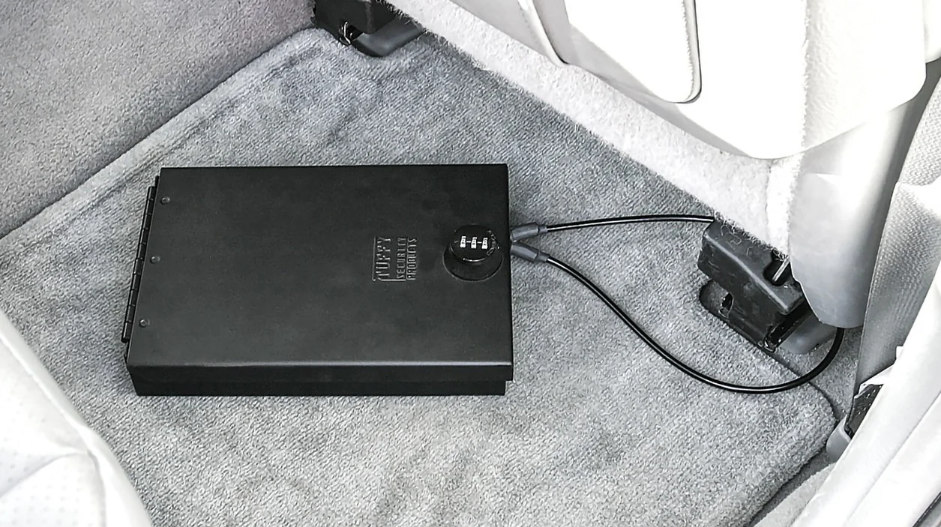
A portable vehicle safe is a lockable welded-steel box that secures a handgun, laptop, tablet, or other valuables and moves with you between vehicles. Instead of bolting into one vehicle, it tethers to a seat frame with a steel cable. Some models slide into a mounting sleeve you install once.
Portable vs. Universal vs. Vehicle-Specific Safes
Tuffy builds all three types, and each one solves a different problem. Portable and universal safes and accessories cover vehicles and situations where a vehicle-specific fit isn’t the right match.
Type | How It Attaches | Install Required | Best For
|
|---|---|---|---|
Portable safe | Cable tether or slide-in mounting sleeve | None for the cable; the sleeve bolts down | Multiple vehicles, rentals, and travel |
Universal safe or console | Bolts or floor-mounts in any vehicle with enough space | Drilling usually required | Vehicles with no vehicle-specific fit |
Vehicle-specific console safe or under-seat lockbox | Factory mounting points | About 30 minutes; no drilling on most applications | One vehicle you plan to keep long term |
Who Portable and Universal Vehicle Safes Are Built For?
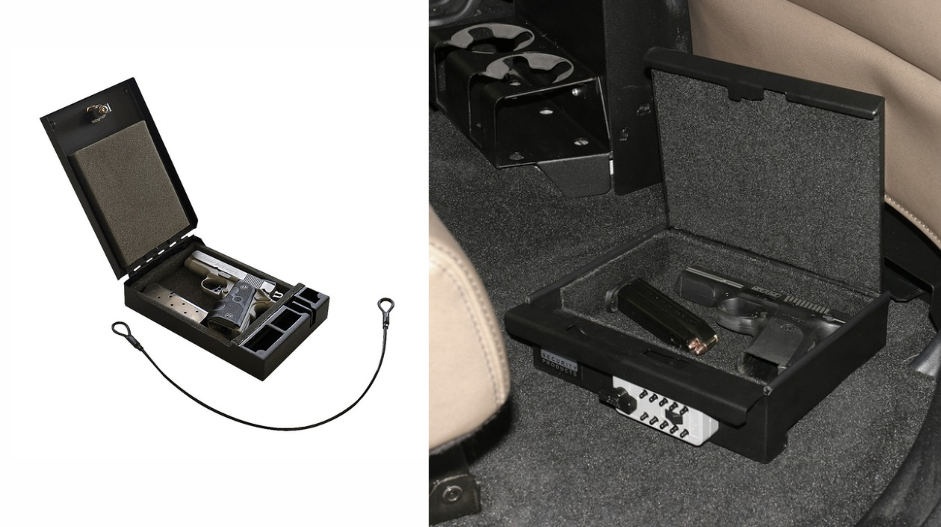
Portable and universal vehicle safes fit people whose vehicles change more often than what they carry. Common examples include:
- Households with more than one vehicle that share one safe.
- Drivers who rent cars or travel often for work or family.
- Professionals who leave a laptop or tablet in a parked vehicle.
- Law-enforcement officers who move a duty weapon between a patrol vehicle and a personal vehicle.
- Sport shooters heading to the range or out on a hunting trip.
- Owners of UTVs, project rigs, and other secondary vehicles.
How to Choose the Right Portable Safe for What You Carry
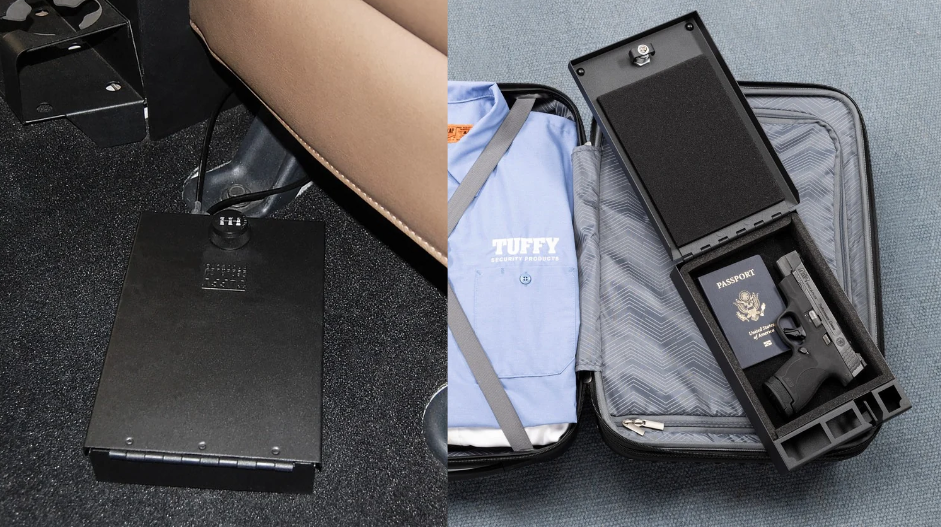
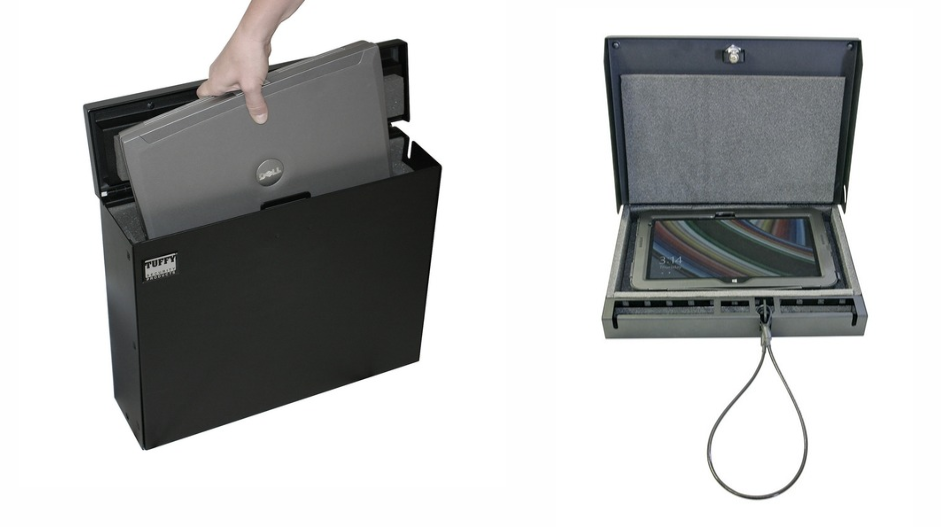
Size a portable safe by measuring two things: the item you carry and the spot where the safe will live. Check the length, width, and height of your handgun, laptop, or tablet. Then measure the space under the seat, in the trunk, or behind the rear seat of a pickup, and pick the size that fits both.
Item | Tuffy Option | Lock | How It Secures
|
|---|---|---|---|
Compact handgun | Portable Safe for Compact Pistols | 3-digit combination with two-point steel cam | Included 2 ft steel security cable |
Full-size handgun | Portable Safe for Full-Size Pistols | 3-digit combination with double-point cam | Included 2 ft steel security cable |
Tablet | Portable Safe for Tablets | 3-digit combination with two-point steel cam | Included cable or surface mount |
Laptop | Laptop safe | 10-tumbler double-bitted key or 3-digit combination | Cable and padlock or surface mount |
Wallet, documents, and valuables | Valuables Tote | Keyed camlock or combination | Slide-in mounting sleeve |
Larger gear | Tactical Lockboxes | Push-button keyed or combination | Cable and/or padlock |
Handguns: Compact and Full-Size Pistol Safes
Tuffy makes two portable safes that secure a handgun, whether you carry for personal protection, sport, or work. Both use welded steel, foam lining, and compression bumpers that keep the lid vibration-free on the road. Each includes a 2 ft, 2,000 lb test steel security cable.
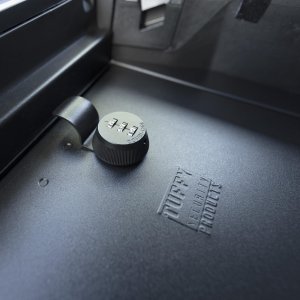
The portable safe for compact pistols weighs less than 3 lbs empty. It measures 9 3/4″ L x 6 1/2″ W x 1 4/5″ H outside, small enough for a bag, under a seat, or the trunk. A 3-digit combination lock drives a two-point steel cam, and a 1/8 inch steel cable anchor point holds the tether.
For a larger frame, the full-size pistol safe weighs less than 4 lbs empty. It measures 11 3/8″ L x 7 1/4″ W x 1 4/5″ H outside, with a powder-coat finish. Its 3-digit combination lock uses a double-point cam.
Laptops and Tablets
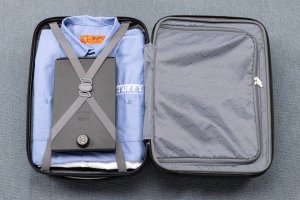
The portable safe for tablets has an interior of 13″ L x 8″ W x 1″ H and weighs less than 7 lbs. It locks with a 3-digit combination and two-point steel cam, and it includes the same 2 ft cable. Built-in access ports let power and data cables pass through, so a tablet can charge while it’s locked inside.
The tablet safe also has pre-drilled holes for surface mounting with your own hardware. Once it’s mounted, a lid restrictor lets you set the opening to 3 or 5 inches.
For a computer, the laptop safe fits most standard 15 inch laptops. It’s built from Tab-Loc welded steel with heavy-duty foam lining and the patented Pry-Guard system. Choose Tuffy’s 10-tumbler double-bitted key or a 3-digit combination lock.
You can secure the laptop safe with a standard cable and padlock through its padlock mounting point, with no drilling (cable and padlock not included). If you’d rather bolt it down, it mounts behind the rear seat of a pickup or on almost any flat surface. Hardware mounting requires drilling, and Grade 8 hardware is included.
Wallets, Documents, and Everyday Valuables
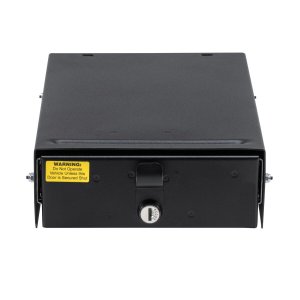
The Valuables Tote holds a wallet, passport, or papers in a carpet-lined interior of 6 3/16″ L x 9 1/2″ W x 2″ H. It’s welded steel with the patented Pry-Guard system and a built-in carry handle. Choose a camlock with Tuffy’s 10-tumbler double-bitted key or a combination lock.
The tote slides into a mounting sleeve and locks in place, then lifts out and goes with you by the handle. One sleeve is included, and extra sleeves let you dock the same box in a second vehicle, at home, or at the office.
Larger Gear: Tactical Lockboxes
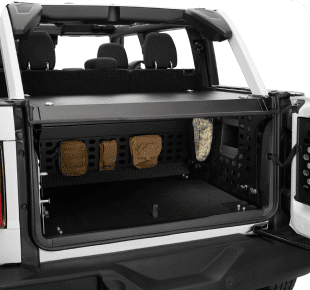
For gear that won’t fit a small safe, Tuffy offers lockboxes originally developed for the U.S. Government. They come in three sizes: 36″ x 20″ x 9″, 35″ x 12″ x 5″, and 40″ x 12″ x 9″. Each has a gas strut lid, a carpet-lined interior, and the patented Pry-Guard II system with an anti-twist push-button lock.
Pick the 10-tumbler double-bitted key or a combination push-button version. Secure the box with a cable and/or padlock (not included), then release it when you move to another vehicle.
How Do You Secure a Car Safe Without a Full Install?
Tuffy’s portable car safes can secure with a steel cable instead of bolts. Tuffy’s pistol and tablet safes include a 2 ft, 2,000 lb test steel cable. Wrap it around a seat frame or other structural point under 2 ft around, attach it to the safe, and lock the lid. When you switch vehicles, unlock the safe, release the cable, and repeat.
- Pick a spot out of plain sight, such as under a seat or in the trunk.
- Find a structural anchor point, such as a seat frame, with a circumference under 2 ft.
- Wrap the cable around the anchor and attach it to the safe’s cable anchor point.
- Place your item inside, close the lid, and lock it.
- Check that the safe can’t slide free of the anchor, then cover it or tuck it away.
Cable Tether
A cable tether is the simplest multi-vehicle setup Tuffy offers. The pistol and tablet safes ship with their cable, so there’s nothing extra to buy and nothing to drill.
Larger boxes use a longer cable. The looped-end security cable is 6 ft of 3/8 inch braided galvanized steel with a vinyl coating. It’s made for the tactical lockboxes and the laptop lockbox, with easy installation and removal for drivers who use more than one vehicle.
Slide-In Mounting Sleeve
The Valuables Tote uses a different approach. You bolt its mounting sleeve to the vehicle once, which does require drilling. After that, the tote slides in, locks, and lifts back out whenever you want to take it with you.
Extra sleeves extend the same box to another vehicle, your home, or your office. One safe, several places to dock it.
Surface Mount When You’re Ready
If one vehicle becomes the safe’s permanent home, the tablet and laptop safes can bolt down. The tablet safe has pre-drilled holes for your own hardware. The laptop safe includes Grade 8 hardware for mounting behind a pickup’s rear seat or on a flat surface, and both options require drilling.
Keyed or Combination: Choosing a Lock That Doesn’t Need Batteries
Every Tuffy portable safe uses a mechanical lock, either keyed or combination. There are no batteries to replace and no electronics to lose power or fail in extreme heat or cold. That matters in a vehicle, where cabin temperatures swing hard with the seasons and a safe may sit untouched for weeks.
A combination lock means no key to carry or lose, which suits shared safes in multi-vehicle households. The pistol and tablet safes use a 3-digit combination with a steel cam. The laptop safe and Valuables Tote offer a combination version too.
A keyed lock suits drivers who prefer a physical key. Tuffy’s 10-tumbler double-bitted key is available on the laptop safe, the Valuables Tote, and the tactical lockboxes.
Can Thieves Steal a Portable Car Safe?
A portable car safe works through concealment and delay. Kept under a seat or in the trunk, it gives a thief nothing to spot. Tethered to a structural point with a 2,000 lb test cable, its welded-steel box and mechanical lock add time and effort to any attempt.
A few habits help the safe do its job:
- Always tether the safe, even for short stops.
- Choose an anchor point that’s part of the vehicle’s structure.
- Keep the safe under a seat, in the trunk, or covered.
- Load and lock it before you arrive, so you aren’t handling valuables in a parking lot.
For items that stay in one vehicle most of the time, a vehicle-specific safe mounted at factory points adds another layer. That’s covered in the final section.
Traveling and Flying with a Portable Safe
A portable safe goes wherever you go, including a rental car at the end of a flight. Rules for flying with a locked case, and especially with a firearm, are set by the TSA and by each airline, and they can change.
Before you fly, check the current TSA firearm travel guidance and your airline’s own policy. Firearm transport and storage laws also vary by state and city, so review the laws for every place you’ll drive through or stay.
Once you land, the included cable lets you tether a pistol or tablet safe to the rental’s seat frame with no drilling. When you return the car, unlock it, release the cable, and pack it back up.
When to Upgrade to a Vehicle-Specific Safe
Portable safes are Tuffy’s multi-vehicle solution, built from welded steel and ready for any vehicle you drive. Some drivers also want a permanent home for their valuables in the vehicle they drive every day. That’s when a vehicle-specific safe makes sense.
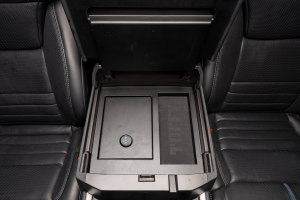
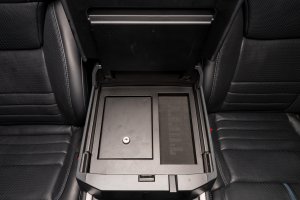
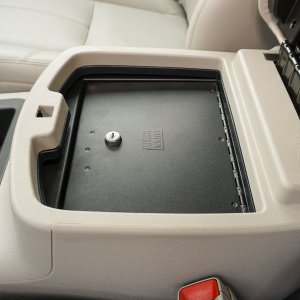
Tuffy’s console safes install inside your vehicle’s existing factory console in about 30 minutes, with no drilling on most applications. Each is engineered to fit your exact vehicle and look factory. The console safe is also the only Tuffy safe you can reach from the driver’s seat.
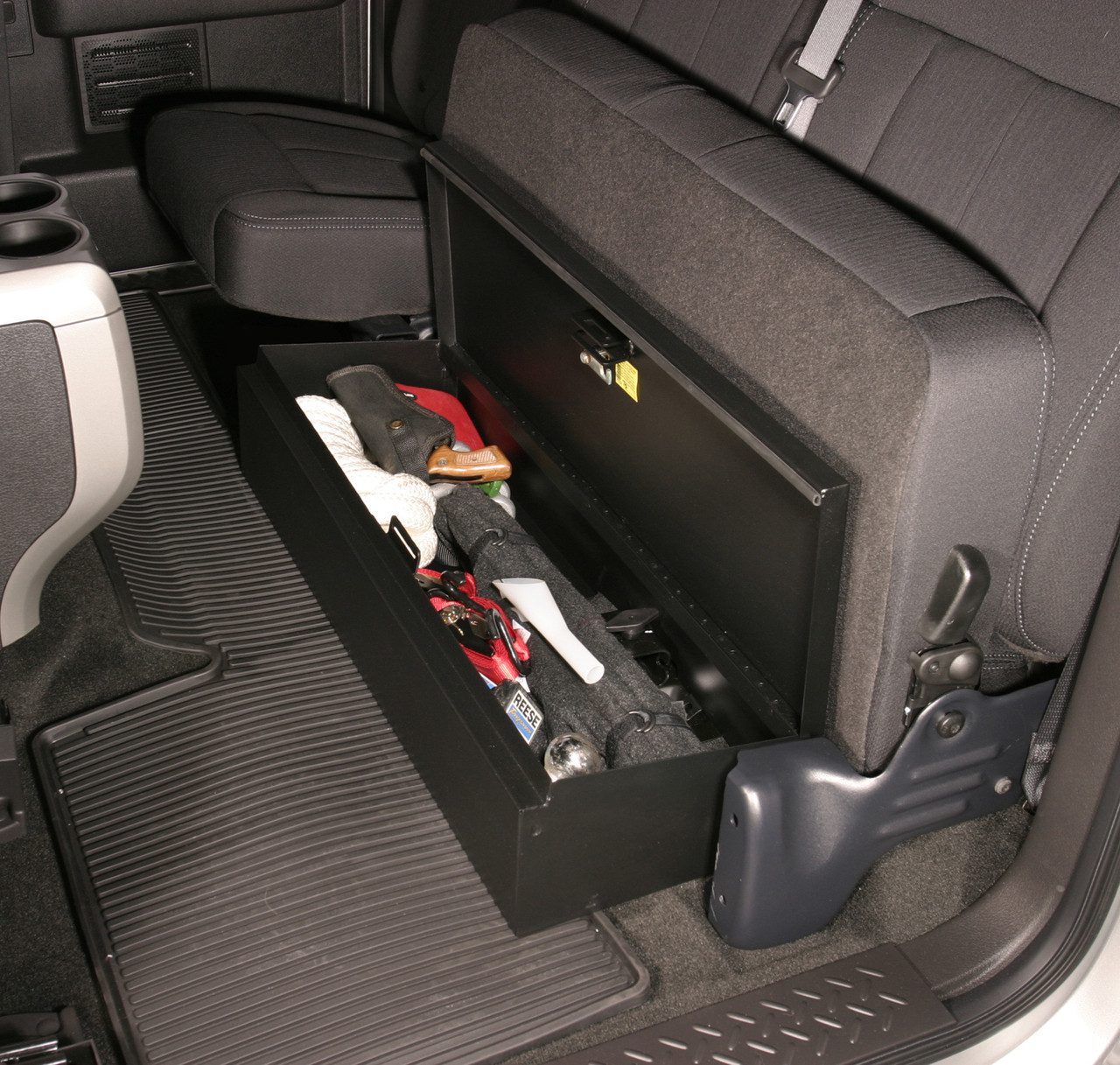
Truck owners can add under-seat lockboxes, which install beneath the rear seat. They’re built for trucks only and keep larger items out of sight.
For cars and other vehicles without a vehicle-specific fit, the Universal Series II Center Console replaces the console entirely. It floor-mounts with three drilled holes and fits any vehicle with enough space, though it doesn’t work with bench seats. Widths include 6 1/2″, 8″, 10″, and 12 1/2″.
Many drivers use both: a vehicle-specific safe in the daily driver and a portable safe for everything else. Tuffy has been the original vehicle-specific security brand since 1989. Its products are engineered and designed in the USA, shipped from the USA, and backed by a Built-for-Life warranty against defects in material and workmanship.
Ready to lock it and leave it? Explore the portable safe lineup to find the size that fits what you carry. For the vehicle you drive most, search your year, make, and model to confirm a vehicle-specific fit.
Frequently Asked Questions About Portable and Universal Vehicle Safes
Here are clear answers to the questions drivers ask most about portable and universal vehicle safes.
What Is a Portable Vehicle Safe?
A portable vehicle safe is a lockable welded-steel box that secures a handgun, laptop, tablet, or documents and moves with you between vehicles. Instead of bolting into one vehicle, it tethers to a seat frame or other structural point with a steel cable. Tuffy’s Valuables Tote slides into a mounting sleeve instead.
Is There a Discreet Way to Secure a Handgun in My Car?
Yes. Tuffy’s Portable Safe for Compact Pistols weighs less than 3 lbs empty and measures 9 3/4″ L x 6 1/2″ W x 1 4/5″ H. It fits in a bag, under a seat, or in the trunk. Its included 2 ft, 2,000 lb test steel cable secures it to a seat frame out of sight.
Where Is the Best Place to Put a Portable Safe in a Car?
Put a portable safe where it stays out of sight and can tether to the vehicle’s structure. Under a seat or in the trunk works well for most drivers. Pickup owners can also mount the laptop safe behind the rear seat. Measure the space first so the safe fits without sliding around.
How Do You Secure a Car Safe Without Drilling?
Use a cable tether. Tuffy’s pistol and tablet safes include a 2 ft, 2,000 lb test steel cable. Wrap it around a seat frame or other structural point under 2 ft around, attach it to the safe, and lock it. The laptop safe can also secure with a standard cable and padlock, sold separately.
Can One Portable Safe Work in More Than One Vehicle?
Yes. A cable-tethered safe moves between vehicles: unlock it, release the cable, and tether it in the next vehicle. The Valuables Tote slides into a bolt-down mounting sleeve. One sleeve is included, and extra sleeves let you dock the same box in a second vehicle, at home, or at the office.
Do Portable Vehicle Safes Need Batteries?
Tuffy portable safes don’t need batteries. Every model uses a mechanical lock, either keyed or combination, so there are no electronics to lose power or fail in extreme heat or cold. The pistol and tablet safes use a 3-digit combination. The laptop safe, Valuables Tote, and tactical lockboxes offer Tuffy’s 10-tumbler double-bitted key.
Can I Fly with a Portable Safe?
Rules for flying with a locked case, and especially with a firearm, are set by the TSA and each airline, and they can change. Check current TSA guidance and your airline’s policy before you travel. Firearm laws also vary by state and city, so review the rules everywhere you’ll drive or stay.
How Much Does a Portable Vehicle Safe Cost?
Tuffy’s portable pistol, tablet, laptop, and valuables safes typically cost around $100 to $300, depending on size and lock type. Larger tactical lockboxes cost more. Prices can change, so check current pricing on each product page. Tuffy portable safes are backed by a Built-for-Life warranty against defects in material and workmanship.