











Key Takeaways
- Most vehicle break-ins are fast, opportunistic smash-and-grabs, so a console safe’s real job is to conceal your valuables and deny the quick, obvious grab that thieves count on.
- A pry-resistant console safe wins on construction: heavy-duty cold-rolled welded steel, tight lid-to-body tolerances, and a lock geometry that gives a screwdriver or pry bar nothing to grab.
- Steel construction matters more than any single number: welded steel resists prying and cutting far better than a plastic tray, an aluminum shell, or lightweight sheet metal.
- A bolted-in, vehicle-specific safe removes the easiest attack of all, carrying the whole box away, while a cable-tethered portable safe remains a smart choice for multi-vehicle use.
- To judge any vehicle safe, check the steel and welds, the lock design, the mounting, and whether it is engineered to fit your exact year, make, and model.
Are console safes easy to break into? The honest answer: a cheap plastic tray with a padlock is, but a well-built, vehicle-specific steel safe is not. Real break-in resistance comes down to three things: the steel, the lock, and how the safe is mounted.
This breakdown skips the fear and walks through the engineering. You will see how each choice changes what a thief can do in the seconds they actually have.
Are Console Safes Easy to Break Into? What Break-In Resistance Really Means
Break-in resistance is not about being unbeatable; it is about concealment and delay. Most vehicle thefts are opportunistic smash-and-grabs, so a locked steel box that hides your valuables defeats the crime most drivers actually face. Determined, tool-equipped entry is far rarer, and sound engineering makes even that attempt slow, loud, and rarely worth the effort.
Think about the difference in outcomes. An opportunistic thief has seconds and wants an easy target. If your valuables are out of sight inside a locked steel safe, most move on to an easier car.
Concealment does a lot of quiet work here. A thief cannot want what a thief cannot see, so keeping a phone, wallet, or laptop out of sight removes the temptation before it starts. A locked steel safe makes that concealment permanent, not just a jacket tossed over the seat.
So the real question is not whether a safe can ever be defeated. It is whether it defeats the theft you are actually likely to face, and whether it buys enough time to make a serious attempt pointless.
The Steel: How Construction Decides Console Safe Security
For console safe security, construction decides everything. A plastic organizer or a thin aluminum shell can be pried, punched, or peeled with a common screwdriver. Heavy-duty cold-rolled welded steel behaves differently: the walls resist deformation, welded seams hold under leverage, and there is no easy panel to bend back.
Does Steel Thickness Matter for a Vehicle Safe?
Thickness matters, but not as a single magic number. What matters more is the whole picture: welded joints instead of folded seams, and steel heavy enough to resist bending under a pry bar.
This is why Tuffy describes its build as heavy-duty cold-rolled welded steel rather than chasing a gauge number. A welded steel box distributes force across the whole structure, so a thief cannot isolate one weak panel and work it loose.
Cutting attacks tell the same story. A rotary or cutting tool struggles against welded steel, throws sparks, and makes noise that draws attention in any parking lot. The same tool goes through plastic or thin aluminum with almost no effort.
You can see this approach across Tuffy’s console safes, which are engineered as welded steel enclosures rather than bins with a lid.
Lock Mechanism Design and Pry Resistance
A lock is only as good as the geometry around it. Pry resistance comes from how tightly the lid meets the body, how the locking points engage, and how little gap a tool can exploit. A strong lock set into a loose, flimsy box still fails, while a modest lock inside a tight welded enclosure holds.
What Makes a Console Safe Pry-Resistant?
Tuffy’s answer is Pry-Guard, its patented locking system. It uses 1/8-inch-thick welded steel components at the points where a pry attack concentrates force, so the lid and body resist being wedged apart.
You also get a choice of lock types to match how you use the vehicle. Options include a keyed 10-tumbler double-bitted lock and mechanical push-button combination locks in 3-digit and 4-digit versions.
The lock also decides how you live with the safe day to day. A keyed lock keeps things simple, and a combination lock frees you from carrying a key while still giving you fast, keyless access. Each option locks into the same welded steel body.
This is what separates a genuinely pry-resistant console safe from a box that merely has a lock on it.
How a Console Safe Is Pry-Tested
Pry-testing is about thinking like an attacker and removing what they need. A thief looks for a leverage point: a gap at the lid, an exposed edge, a thin panel, or a fastener to attack. Testing applies force at each point and asks one question: does the safe give the tool anything to grab?
A well-tested design closes the obvious openings. The lid sits flush with tight tolerances, so there is no lip to catch a pry bar. Seams are welded, not folded, so they do not peel.
The mounting is part of the test, too. If the safe is bolted to the vehicle, a thief cannot simply lift it out and defeat it later at their own pace.
The goal is not a box that never yields to any tool on earth. The goal is a box that makes a quiet, quick entry impossible, which is exactly what stops real-world theft.
Construction Comparison: What Holds and What Fails
The clearest way to judge break-in resistance is to compare how different products are built. The table below lines up three common options: a plastic tray or lightweight box, a portable safe, and a welded-steel vehicle-specific safe. Each has a place, but they behave very differently when someone tries to force them open.
|
Attribute |
Plastic Tray or Lightweight Box |
Portable Safe |
Welded-Steel Vehicle-Specific Safe |
|
Material |
Plastic or thin sheet metal |
Steel or polymer shell, often cable-tethered |
Heavy-duty cold-rolled welded steel |
|
Joinery |
Molded or riveted |
Folded, spot-welded, or molded |
Fully welded seams |
|
Lid fit |
Loose, with wide gaps |
Tighter, varies by model |
Flush, tight tolerances |
|
Lock |
Basic latch or padlock |
Keyed, combination, or electronic |
Patented Pry-Guard: keyed or combination |
|
Mounting |
Sits loose in the vehicle |
Cable tether to an anchor point |
Bolted to factory mounting points |
|
Against opportunistic theft |
Minimal; valuables often visible |
Strong; conceals and deters the grab |
Strong; conceals and defeats the grab |
|
Against determined entry |
Low resistance |
Solid; held by the tether |
High; leverage and tools find little to exploit |
For real, everyday theft protection, a welded steel, vehicle-specific safe is the standard, and it’s what Tuffy is built around. When you need security that travels, Tuffy’s portable safe tethers to an anchor point and moves between vehicles, delivering that same welded steel protection in a carry-friendly form. A plastic tray only organizes; it adds no real security. So start with how you drive: if the safe stays with the vehicle, go vehicle-specific; if it needs to move with you, go portable. Either way, the answer is welded steel, not plastic.
Bolted-In vs. Portable Safes: Why Mounting Matters
Mounting is the difference most buyers overlook. A safe that bolts to the vehicle using factory mounting points cannot be carried off, so a thief must defeat it in the open. A portable safe trades that fixed strength for flexibility, staying useful across more than one vehicle.
A bolted-in, vehicle-specific safe is the strongest setup against theft. There is no box to grab and walk away with, and the factory fit means the safe sits exactly where it belongs.
A portable safe is the smart choice when you move gear between vehicles or need to carry it inside. Tethered by a cable to a solid anchor, it still conceals valuables and resists a casual grab.
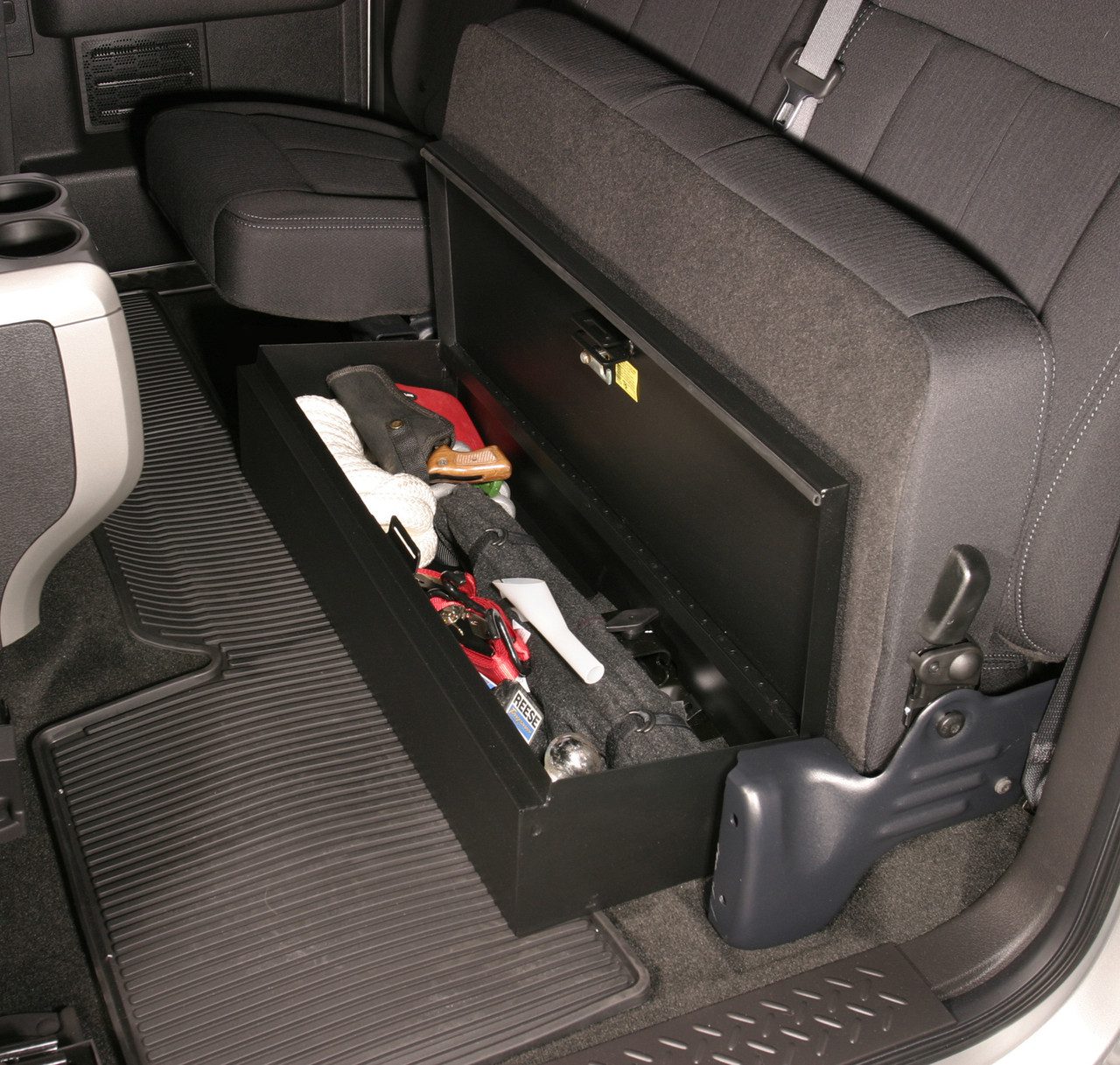
Trucks have another option for larger gear. A rear under-seat lockbox, available for trucks only, mounts under the rear bench in welded steel and holds long items a console safe cannot.
What to Look for in Any Vehicle Safe
When you shop, judge the engineering, not the marketing. A few concrete signals separate a real security product from a locking bin. Use the checklist below to compare any vehicle safe on the things that actually decide whether it holds.
- Welded steel construction: Look for heavy-duty cold-rolled welded steel, not plastic, aluminum, or folded sheet metal.
- Tight lid tolerances: A flush lid with minimal gaps leaves a pry tool nothing to wedge into.
- Pry-resistant lock design: The locking points and hardware should resist leverage, not just secure a latch.
- Solid vehicle-specific mounting: A safe bolted to factory mounting points cannot be lifted out and carried away.
- Concealment: The safe should hide your valuables and look like part of the interior.
- Built-for-Life warranty: A lifetime warranty signals the maker stands behind the construction.
- Verified fitment: Confirm the safe is engineered for your exact year, make, and model.
Tuffy’s vehicle-specific console safes are engineered against every point on this list, which is why they look factory and hold up under a real attack.
Where Tuffy Fits for Everyday Drivers
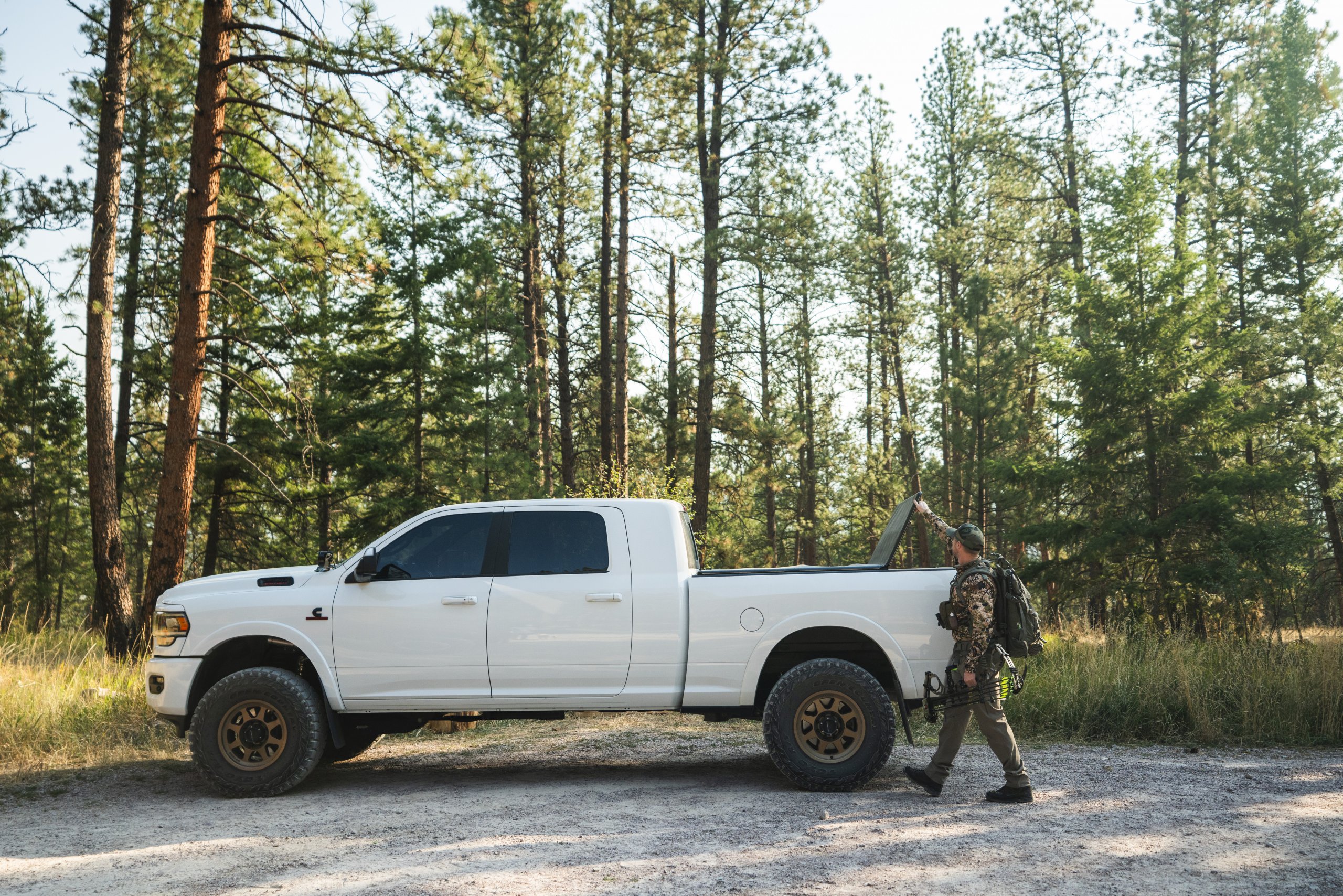
Tuffy has built vehicle-specific steel security since 1989, starting with a welded lockbox for a broken-into Jeep. Today that same conviction shows up in console safes for trucks, SUVs, Jeeps, and crossovers. Each one drops into your existing factory center console and locks up what you carry, so you can walk away without a second thought.
A Tuffy console safe fits inside the console you already have. It does not replace your factory insert, tray, armrest, or lid, so the interior still looks and works exactly like stock.
Installation takes about 30 minutes. Most models install using factory mounting points with no drilling, though some vehicles do require you to drill your own mounting holes.
Every safe carries the patented Pry-Guard locking system and a Built-for-Life warranty. Tuffy is part of the Bestop Premium Accessories Group.
That warranty is not a marketing line. It reflects welded steel built to outlast the vehicle it protects, so the safe you buy today keeps doing its job for years.
The lineup reaches well beyond trucks. If you drive an SUV or crossover, there is a console safe for SUVs like the Ford Explorer. The lineup also fits the Tahoe, Yukon, Suburban, Rav4, Escalade IQ, Acadia, Traverse and Expedition.
So, are console safes easy to break into? Not the well-built ones. A welded steel, vehicle-specific safe conceals what you carry and denies the quick grab that defines real-world theft.
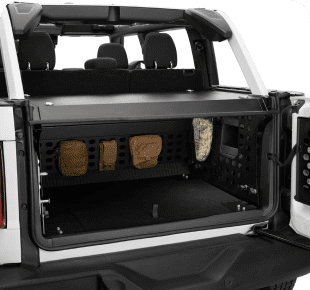
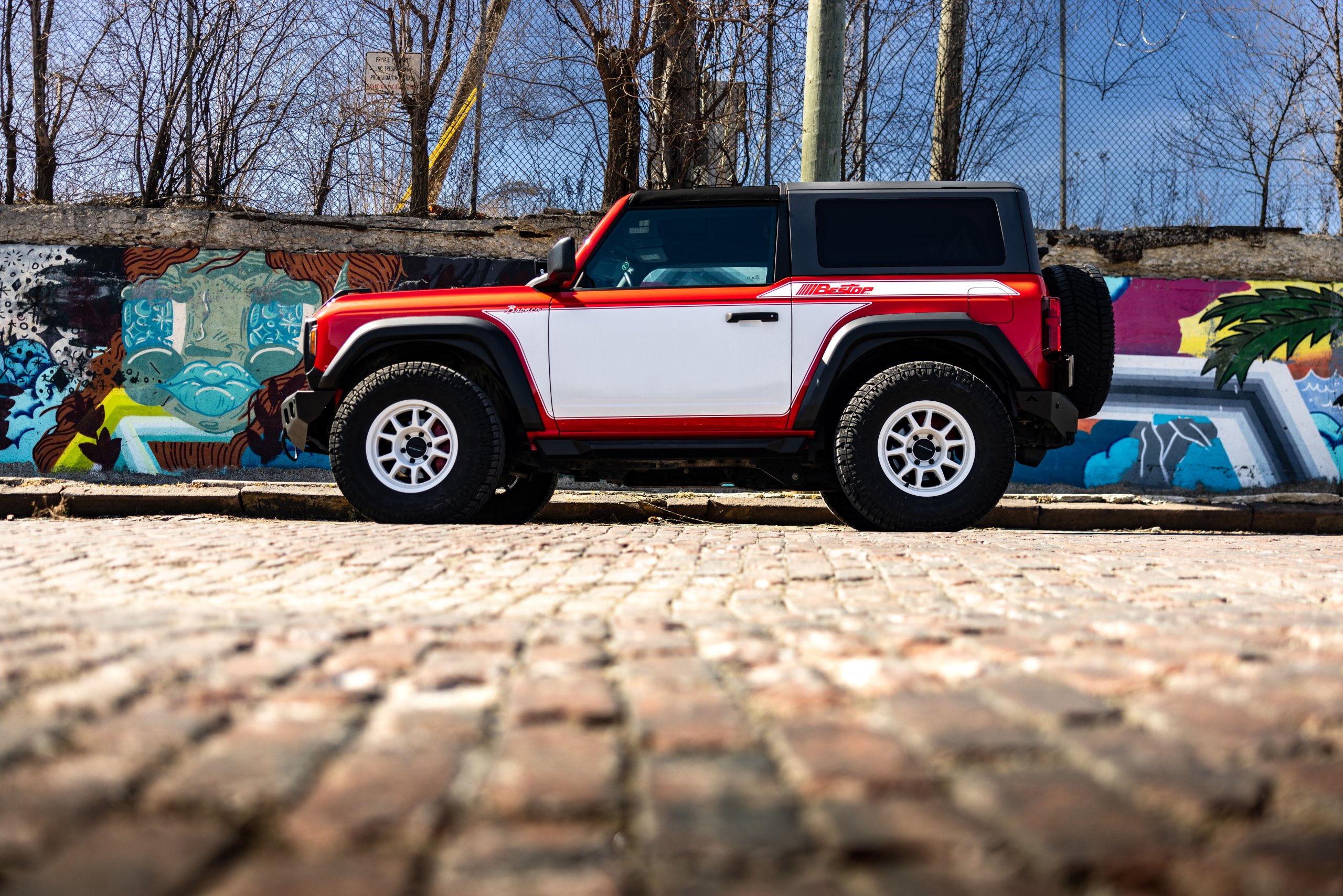
Explore Tuffy’s console safes and confirm the exact fit for your car, truck, SUV, UTV, Bronco, and Jeep by searching your year, make, and model. Check factory options like a premium subwoofer or shifter type first, since they affect console clearance.
Frequently Asked Questions About Console Safe Security
Quick, direct answers to the questions buyers ask before trusting a console safe with what they leave in the truck.
Are Console Safes Easy to Break Into?
A quality console safe is not easy to break into. Welded steel construction, a pry-resistant lock, and a bolted-in, vehicle-specific fit defeat the smash-and-grab thefts that make up most vehicle break-ins. Thin, plastic, or loosely mounted boxes are the ones that fail.
What Makes a Console Safe Pry-Resistant?
Pry resistance comes from four things working together: welded (not folded or riveted) steel, tight tolerances that leave no gap for a tool to bite, a lock built to resist prying like Tuffy’s Pry-Guard system, and a solid mount to the vehicle so the safe cannot be twisted or pulled free.
Are Center Console Safes Worth It?
For most drivers, yes. A center console safe turns unlocked factory storage into a concealed steel compartment for wallets, electronics, documents, or a firearm. It stops opportunistic theft, hides valuables from view, and installs without changing how your interior looks or works.
Can a Thief Pry Open a Car Safe With Hand Tools?
A cheap safe can be defeated with a screwdriver or pry bar; a well-built one resists it. What matters is steel thickness, weld quality, lid-to-body tolerance, and lock design. Tuffy’s Pry-Guard locking system uses 1/8-inch-thick welded steel components specifically to deny tools the leverage they need.
Is a Bolted-In Console Safe More Secure Than a Portable One?
A bolted-in, vehicle-specific safe resists theft better because it cannot simply be carried off. Portable safes have their place for multi-vehicle use and can be cable-tethered, but a safe anchored to the vehicle’s factory mounting points removes the easiest attack: taking the whole box.