











Key Takeaways
- Fitment comes first: the best vehicle security is engineered to your exact year, make, model, and console configuration, so it installs cleanly and looks factory instead of bolted on.
- Match the mounting style to how you drive: a console safe secures a handgun at the driver’s seat, while an under-seat lockbox or security drawer handles larger loads.
- Judge security on heavy-duty cold-rolled welded steel, a pry-resistant locking system, and concealment plus delay, not on a plastic tray with a padlock.
- Size to what you carry: a console safe secures a handgun, phone, wallet, and documents, while full-width crew-cab under-seat lockboxes and truck-bed boxes stow long guns and gear.
- Installation is straightforward: most vehicle-specific products mount to factory points with no drilling on most applications, taking about 30 minutes with basic hand tools.
A vehicle gun safe is a lockable steel container that secures a firearm and valuables inside your truck, mounted to fit a specific vehicle. If you are searching for the best gun safe for truck use, start with the everyday reality: you keep a handgun, phone, wallet, and documents in the cab, and most factory consoles have no real lock. A good truck gun safe conceals what you carry and delays a break-in, so you can lock it, leave it, and walk away without a second thought.
What Makes the Best Gun Safe for a Truck?
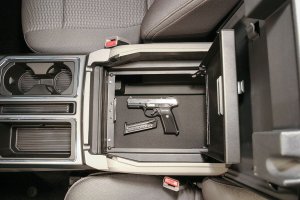
The best gun safe for a truck is engineered for your exact vehicle, built from heavy-duty cold-rolled welded steel, and secured by a pry-resistant locking system. It conceals a firearm and valuables, delays forced entry, and installs cleanly using factory mounting points. Match the mounting style to where you sit and what you carry, then confirm fit by year, make, and model.
Here are the features to evaluate before you buy:
- Vehicle-specific fitment: engineered to your year, make, model, and console configuration for a clean, factory look.
- Welded steel construction: heavy-duty cold-rolled welded steel resists prying far better than plastic trays or aluminum boxes.
- Pry-resistant locking: a patented locking system with built-in weather seals that conceals the latch and resists screwdrivers and pry bars.
- Reliable access: mechanical, battery-free locks that will not lose power or fail in extreme heat or cold.
- Right-sized capacity: room for a handgun and daily valuables, or a long gun and gear in larger formats.
- Clean installation: mounts to factory points with no drilling on most applications in about 30 minutes.
Start With Fitment: Vehicle-Specific vs. Universal
Fitment comes before every other spec. A product engineered for your exact vehicle drops into place, uses factory mounting points, and looks like it belongs. A generic box that almost fits leaves gaps, shifts under load, and hints that something valuable is hidden.
Fitment is determined by the vehicle and its console configuration, such as a full-floor console versus a flow-through console, or a column shift versus a floor shift. It is not determined by trim name. A safe built for one model will not fit another, so confirm by year, make, and model.
Vehicle-specific products (console safes, under-seat lockboxes, and security drawers) are built to a truck’s geometry. Universal and portable options are a legitimate choice when you need one solution across several vehicles, or when no vehicle-specific fit exists yet. Universal consoles mount to the floor and require drilling, and portable safes cable-tether between vehicles. Tuffy engineers vehicle-specific fits for popular platforms, including Ford console safes, Chevrolet and GMC console safes, Ram console safes, and Toyota console safes. To confirm your fit, use the vehicle selector and search your year, make, and model.
Where Can You Mount a Gun Safe in a Truck?
Replace this box with the section’s hero image (with descriptive alt text).
You can mount vehicle security in several places: inside the factory center console, under the rear seat, in a slide-out drawer under the seat, in the cargo area or truck bed, or with a portable safe that moves between vehicles. Only a console safe is reachable from the driver’s seat. Larger formats hold more and can secure long guns, but you access them from outside the cab.
| Mounting Style | Best For | Access | Capacity | Fitment |
|---|---|---|---|---|
| Console safe | Handgun and daily valuables | From the driver’s seat | ~330 to 1,050+ cu in | Vehicle-specific (trucks, SUVs, Jeeps) |
| Under-seat lockbox | Long guns and bulk gear | Without lifting the seat (not seat-reachable) | ~2,100 to 4,500+ cu in | Vehicle-specific, trucks only |
| Security drawer | Organized gear and firearm separation | Slide-out without lifting the seat | ~2,100+ cu in | Vehicle-specific (trucks and SUVs) |
| Cargo / truck-bed | Largest loads, long or large items | From outside the cab | Largest capacity | Vehicle-specific (trucks, Jeeps, SUVs) |
| Portable safe | Travel and multi-vehicle use | Tethered inside the vehicle | Multiple sizes | Universal, cable-tether between vehicles |
Console Safes
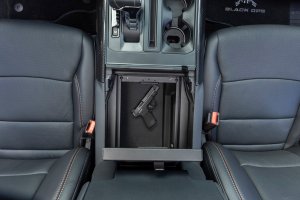
A console safe is a steel security insert that installs inside your truck’s existing OEM center console. It does not replace the console, lid, or insert: the factory armrest and lid keep working, and the safe is engineered to preserve your console volume rather than add to it. This is what a gun safe for truck console searches point to, and it is the only format you can reach from the driver’s seat.
For most drivers, this is the everyday answer: a quick-access, concealed home for a handgun, phone, wallet, and documents. Capacities vary widely by vehicle, from roughly 330 cubic inches in a Toyota Tacoma to 968 or more cubic inches in a Ford F-150, with Chevrolet and GMC around 500 and Ram around 400 (the Ram console requires minor drilling). A console safe secures a handgun; it does not hold long guns.
Under-Seat Lockboxes & Security Drawers

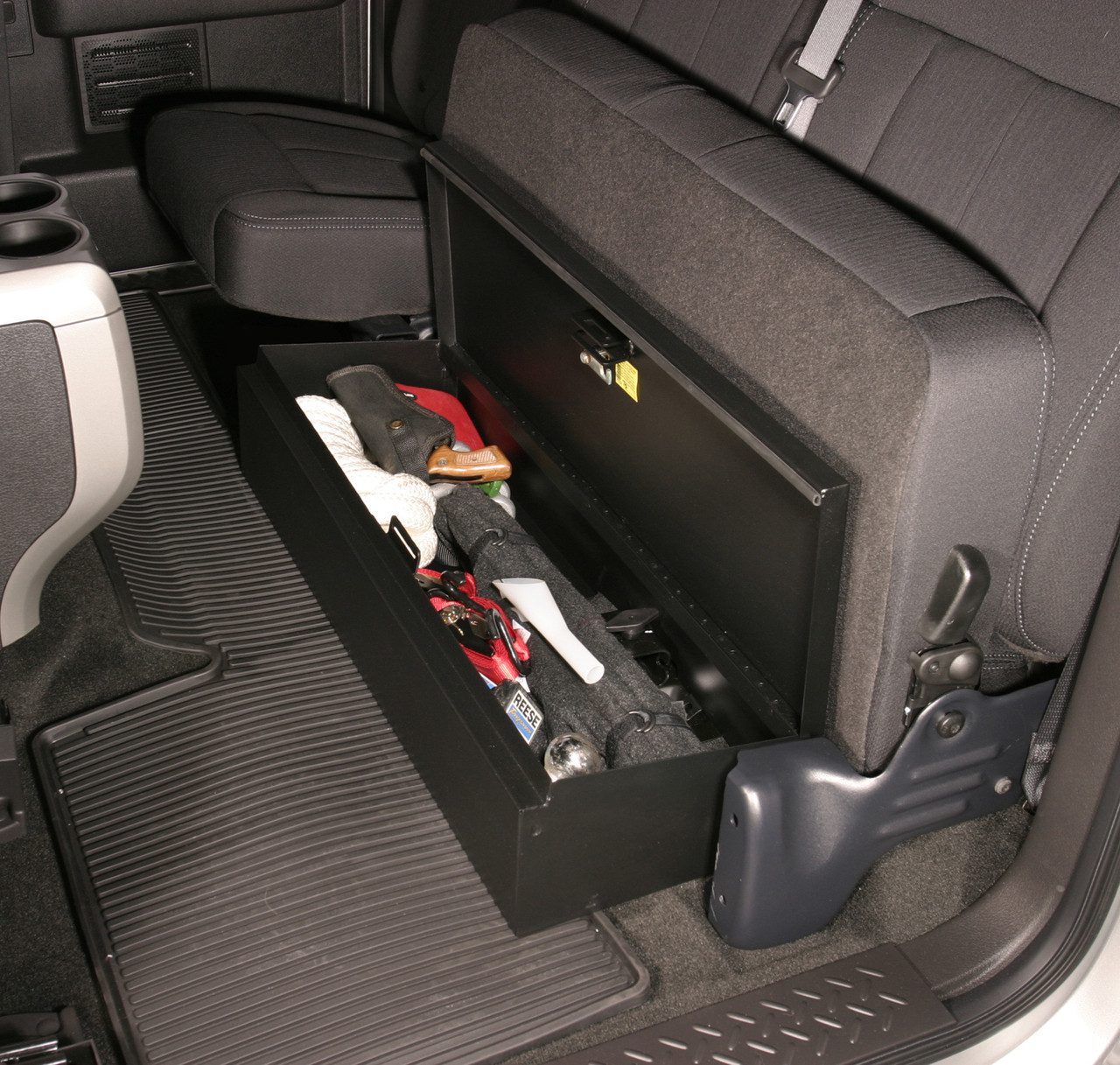
When you need real capacity, look under the rear seat. An under-seat lockbox, sometimes searched as an under-seat gun safe, is a full-width welded steel box that mounts under the rear bench of a truck using factory hardware, hidden from view and out of your legroom. Under-seat lockboxes are a truck-only format; Tuffy does not make them for SUVs.
A security drawer does the same job but slides out on heavy-duty ball-bearing slides for organized access, with optional dividers for a firearm, tools, and gear. The benefit is access without lifting the seat, which matters when the back seat is loaded. Neither format is reachable from the driver’s seat.
These formats are what drivers mean by a truck rifle safe or vehicle rifle safe. Full-width crew-cab under-seat lockboxes can stow long items and firearms, with capacity from roughly 2,100 to 4,500 or more cubic inches; security drawers start around 2,100 cubic inches.
Cargo, Truck-Bed & Portable Options
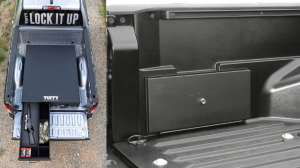
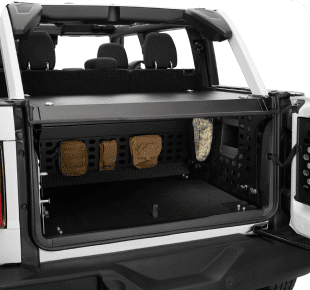
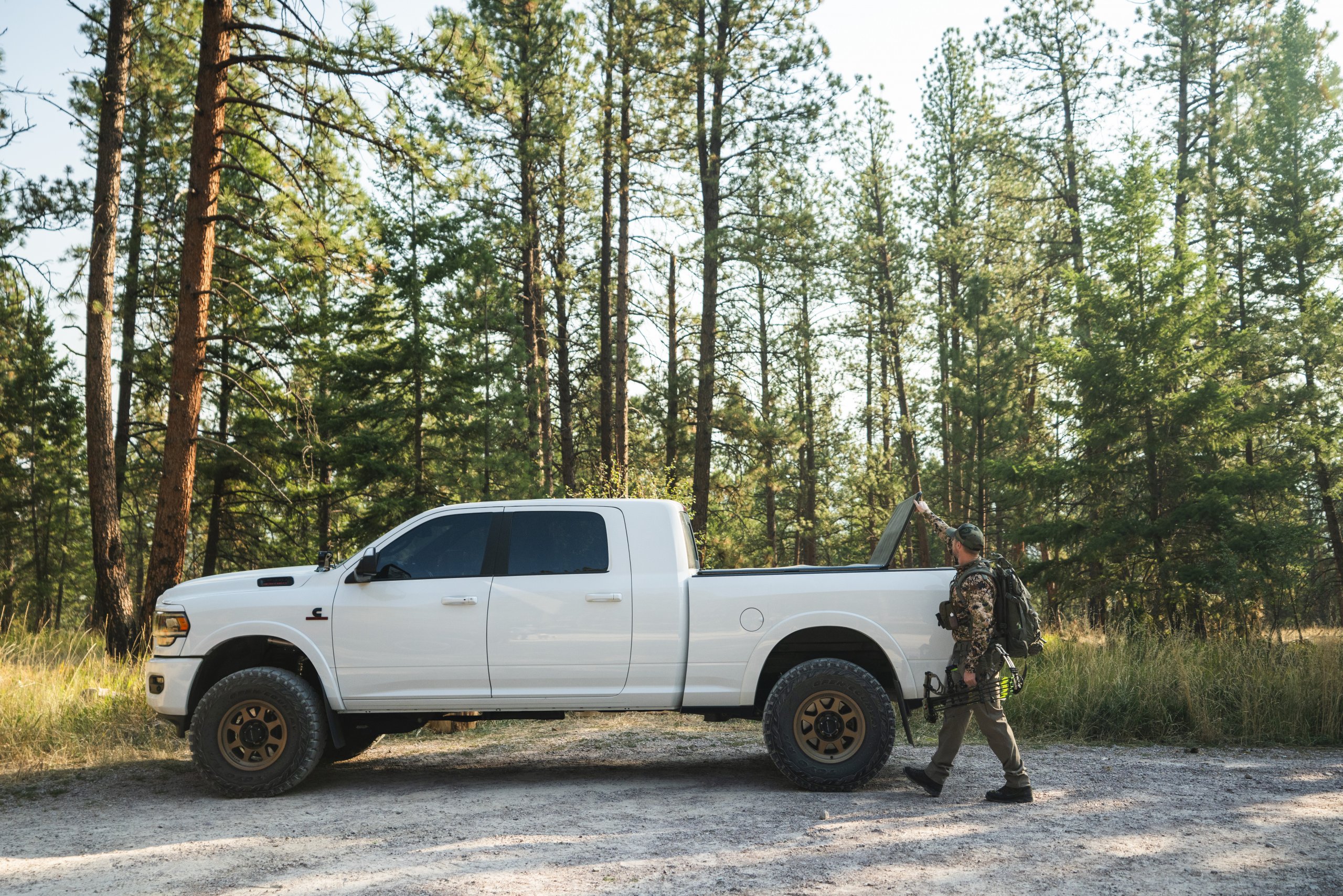
For the largest loads, cargo and truck-bed security move to the back of the vehicle. Tuffy makes cargo security and enclosures, truck-bed boxes and drawers, locking lids, and glove box safes, so you can secure gear across the whole vehicle, not just the cab. A full truck-bed box or drawer can also hold long or large items. These formats are accessed from outside the cab, not from a seat.
A portable safe is Tuffy’s travel and multi-vehicle solution in welded steel. It comes in multiple sizes and cable-tethers inside the vehicle, which makes it popular with officers who move a handgun between a duty vehicle and a personal vehicle. Measure your space and pick the size that fits what you carry.
Steel, Locks & Pry Resistance
Real vehicle security comes down to how a product is built. Look for heavy-duty cold-rolled welded steel rather than plastic or aluminum, and a locking system that resists prying at the seam. No product is theft-proof; security works through concealment and delay. A hidden, pry-resistant steel box makes a firearm and valuables far harder to find and far slower to reach.
Welded steel is the foundation. Plastic trays and thin aluminum boxes flex and pop; welded cold-rolled steel holds under force. That difference is the whole point of choosing security storage over a factory bin.
Tuffy secures its console safes with two lock choices, both backed by the patented Pry-Guard locking system and built-in weather seals. You can choose a keyed lock that uses an exclusive 10-tumbler double-bitted key, or a mechanical push-button combination in 3-digit or 4-digit form. These locks are mechanical and battery-free, so there is nothing to lose power or fail in extreme heat or cold.
Much of the market now sells electronic, keypad, and biometric locks. Those add convenience, but they depend on batteries and electronics. Tuffy’s choice of mechanical locking is a deliberate reliability advantage inside a vehicle that bakes in summer and freezes in winter.
What Size Vehicle Gun Safe Do You Need?
Size follows what you carry and where it mounts. To secure a handgun with a phone, wallet, and documents, a console safe (roughly 330 to 1,050 or more cubic inches depending on the vehicle) is enough. To secure a long gun, tools, or bulk gear, step up to an under-seat lockbox or security drawer (about 2,100 to 4,500 or more cubic inches). Capacity is set by your vehicle, so confirm the exact figure for your fit.
Do not overbuy or underbuy. A console safe is sized to your console and preserves its usable volume, so it is right for daily carry and valuables. If you regularly transport a rifle or long gear, a car gun safe in the console will not do the job; a full-width under-seat lockbox or truck-bed box will. Capacities are examples across the lineup, not a single option per vehicle, so search your year, make, and model for exact dimensions.
How to Secure and Install a Gun Safe in Your Truck
Installing vehicle security is a straightforward job. On most vehicle-specific products, you mount to the factory (OEM) points with no drilling on most applications, using basic hand tools, in about 30 minutes. Some applications require drilling when the vehicle has no factory points. Tools are needed to install and remove the unit, and once mounted, you lock it, leave it, and walk away.
- Confirm your fit first: search your year, make, model, and console configuration so the product matches your vehicle.
- Choose your lock: pick a keyed 10-tumbler double-bitted lock or a mechanical push-button combination, both secured by Pry-Guard.
- Gather basic hand tools: most installs need only common tools and about 30 minutes.
- Mount to factory points: use the OEM mounting points for a no-drill install on most applications (some require drilling).
- Load and lock it: place your handgun and valuables inside, set your key or combination, and walk away with confidence.
Why Drivers Choose Tuffy
Tuffy is the original vehicle-specific security maker, and has built to that standard since 1989. Every vehicle-specific product is engineered to your exact truck or SUV, built from heavy-duty cold-rolled welded steel, and secured by the patented Pry-Guard system. The result installs clean and looks like it belongs.
Drivers also get a Built-for-Life warranty and products that are engineered and designed in the USA, and shipped from the USA. Tuffy is part of the Bestop Premium Accessories Group. Whether you carry a firearm for personal protection, sport and recreation, or professional duty, the goal is the same: lock it, leave it, done.
Ready to protect what you carry? Confirm the exact fit for your truck or SUV with the vehicle selector, then explore the console safes, under-seat lockboxes, and security drawers built for your year, make, and model. See what welded steel and vehicle-specific engineering do that a plastic tray never will.
Frequently Asked Questions About Vehicle Gun Safes
Common questions truck and SUV owners ask when choosing a vehicle gun safe, from fitment and mounting to security and cost.
What Is the Best Gun Safe for a Truck?
The best option is a security solution engineered for your exact vehicle, built from heavy-duty cold-rolled welded steel, and secured by a pry-resistant locking system. For most drivers, a console safe secures a handgun and valuables at the driver’s seat. For long guns or bulk gear, choose an under-seat lockbox or security drawer.
Where Can You Mount a Gun Safe in a Truck?
You can mount vehicle security inside the factory center console, under the rear seat as a lockbox or slide-out drawer, in the cargo area or truck bed, or as a portable safe that tethers between vehicles. Only the console safe is reachable from the driver’s seat; larger formats are accessed from outside the cab.
Can a Vehicle Gun Safe Hold a Rifle or Long Gun?
Yes, in the right format. Console safes and glove box safes secure a handgun, not long guns. Full-width crew-cab under-seat lockboxes and full truck-bed boxes or drawers can stow long items and firearms, with capacity up to roughly 4,500 or more cubic inches. Confirm the specific dimensions for your vehicle before buying.
What Size Vehicle Gun Safe Do I Need?
It depends on what you carry. A console safe (roughly 330 to 1,050 or more cubic inches, depending on the vehicle) fits a handgun, phone, wallet, and documents. For a long gun, tools, or bulk gear, step up to an under-seat lockbox or security drawer at about 2,100 to 4,500 or more cubic inches.
Are Truck Console Gun Safes Secure and Pry-Resistant?
Yes. A console safe is heavy-duty cold-rolled welded steel secured by the patented Pry-Guard locking system with built-in weather seals, using a keyed or mechanical combination lock. No product is theft-proof, so security works through concealment and delay: the safe hides your valuables and makes forced entry far harder and slower.
Do Vehicle Gun Safes Require Drilling to Install?
On most vehicle-specific products, no. They mount to factory (OEM) points with no drilling on most applications, using basic hand tools in about 30 minutes. Some applications require drilling when the vehicle has no factory points (the Ram console, for example, needs minor drilling). Tools are required to install and remove the unit.
Are Vehicle Gun Safes Weather Resistant?
Tuffy’s console safes, lockboxes, and drawers include built-in weather seals as part of the Pry-Guard locking system, which helps keep out dust and moisture inside the cab. Mechanical, battery-free locks add reliability because there is nothing to lose power or fail in extreme heat or cold. Confirm specifics for your chosen product.
How Much Does a Vehicle Gun Safe Cost?
Pricing varies by product type, vehicle, and lock option. A vehicle security solution typically runs around $200 to $600, with larger under-seat and truck-bed formats at the higher end. Check current pricing for your exact configuration by searching your year, make, and model to see the options available for your vehicle.