











Key Takeaways
- A console safe is a steel lockbox that fits inside your factory center console, adding a secure, lockable steel compartment while the factory armrest, tray, and lid stay in place. Many install with no drilling using factory mounting points, though some vehicles require drilling.
- “Console vault” and “console safe” are two names for the same product, a lockable steel console box, made by several manufacturers, Tuffy among them.
- The four factors that separate a quality console safe from a cheap lockbox are steel construction, lock mechanism, vehicle-specific fit, and installation method.
- Vehicle-specific console safes fit trucks, SUVs, Jeeps, and most crossovers. Start your search with your exact year, make, and model to confirm fitment, then account for factory options that affect clearance before comparing features or prices.

What Is a Console Safe?
A console safe is a steel lockbox designed to fit inside the factory center console found across many vehicles: trucks, SUVs, Jeeps, cars, and crossovers. It drops into the existing console and adds a secure, lockable compartment built from heavy-duty, cold-rolled welded steel and engineered to match the original interior. The factory armrest, and lid stay in place.
Most factory center consoles are nothing more than a plastic bin with a hinged armrest on top. No lock. No real barrier. Anyone who opens the door can reach in and grab whatever is inside: a wallet, a laptop, a firearm, work credentials, or personal electronics. A console safe solves that problem directly. It turns that open bin into a lockable steel compartment that sits flush inside the console, mounts to the vehicle’s existing hardware, and looks like it came from the factory.
Quality console safes share a few common features. They are built from heavy-duty, cold-rolled welded steel. They use a keyed lock, or a combination lock, often with pry-resistant design features. They fit a specific vehicle (year, make, and model, with factory options affecting clearance), which means the mounting points, dimensions, and clearances are engineered for that exact application. Many install with basic hand tools in about 30 minutes using factory mounting points, though some vehicles require drilling.
The result is simple: you lock it, you leave it, and you stop thinking about what is inside.
Console safes are available for most popular trucks and SUVs, including the Ford F-150, Chevy Silverado, GMC Sierra, Ram 1500, Toyota Tacoma, Jeep Wrangler, Chevy Tahoe, and GMC Yukon. Coverage varies by manufacturer, model year, and vehicle configuration, so the first step is always confirming whether a console safe exists for your specific vehicle.
Vehicle-specific console safes are built around a factory center console, so they fit trucks, SUVs, and most crossovers (CUVs), which share that layout: a plastic bin with a hinged armrest and OEM mounting points a safe can bolt to. Cars, UTVs, and side-by-sides often have a smaller, differently shaped, or no lockable console, so a vehicle-specific safe may not apply. If a specific product does not exist for your make and model, we have universal options available; you would just need to verify the dimensions and confirm fit. For those, a universal locking center console adds the same kind of secure storage. Both paths are covered in the sections below.
Console Vault vs Console Safe: What’s the Difference?
“Console vault” and “console safe” are two names for the same thing: a lockable steel box that installs inside your vehicle’s center console. Shoppers use the terms interchangeably.
The overlap makes sense. As vehicle-specific lockboxes caught on, “console vault” became a common shorthand for the product itself. Today you will see both terms describe the same category: a welded steel compartment that fits inside your factory center console. It locks with a key or a combination.
Several manufacturers make console safes for trucks and SUVs, and Tuffy is one of them. Each builds the product a little differently in materials, lock design, mounting method, and vehicle coverage.
When you shop, focus on what the product is made of and how it fits, not the label on it. Confirm the safe fits your exact year, make, and sizing specs, then compare construction, lock type, and installation.
Console Safe vs Glove Box Safe vs Under-Seat Lockbox
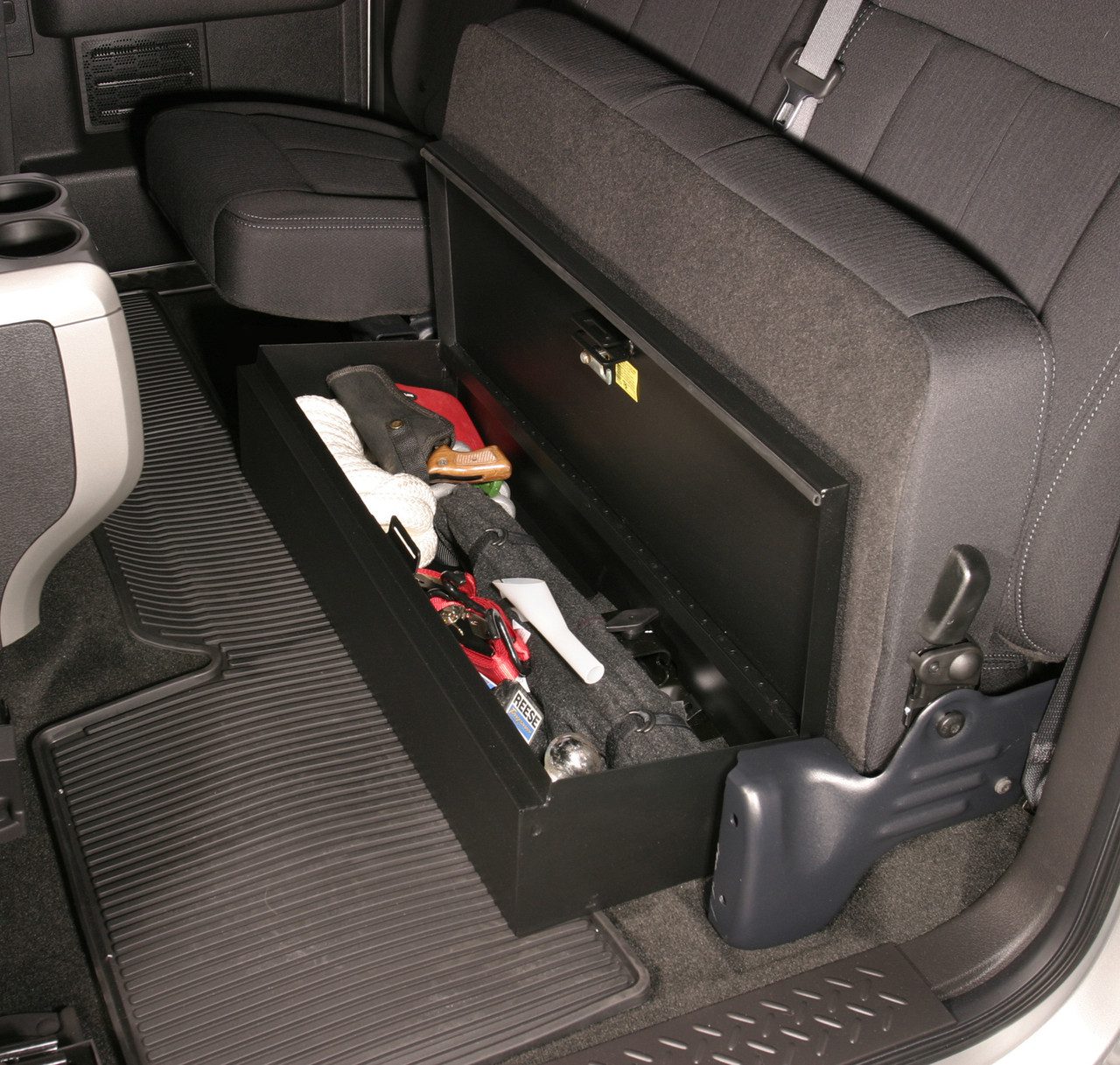
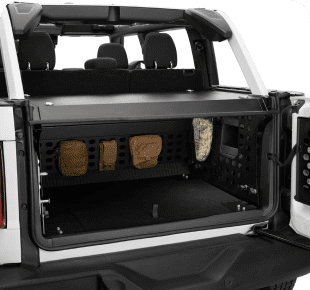
A console safe protects valuables stored in the center console. A glove box safe secures the glove compartment. There are also lockable safes for the cargo area of SUV/CUV as well as for the truck bed. An under-seat lockbox protects larger gear stored under the seat. Each addresses a different part of the vehicle and a different type of cargo.
Here is how they compare:
|
Type |
Location |
What It Protects |
Typical Vehicle Types |
|
Console Safe |
Center console (between front seats) |
Wallet, phone, laptop, firearm, credentials, small electronics |
Trucks, SUVs, Jeeps, crossovers, Cars |
|
Glove Box Safe |
Glove compartment (passenger side dash) |
Documents, small handgun, medication, small valuables |
SUVs, Jeeps |
|
Under-Seat Lockbox |
Under the rear or front seat |
Larger gear, tools, long items, firearms |
Trucks and SUVs with under-seat space |
Most truck and SUV owners who take vehicle security seriously use more than one. A console safe handles the everyday carry items you want secured while the vehicle is parked. An under-seat lockbox or cargo security solution protects the larger gear that does not fit in the console. They serve different purposes and work well together.
The console safe is usually the starting point because it covers the items most people carry every day, and the center console is the first place someone reaches when they break into a vehicle.
What to Look for in a Console Safe
Steel and Construction
Not all steel is equal, and how the box is built matters as much as what it is made of. Tuffy console safes use heavy-duty, cold-rolled welded steel, which stands up to force far better than the lighter sheet metal, plastic, or aluminum boxes sold as budget alternatives.
How the steel is joined matters just as much. Welded construction creates a continuous bond between panels, which resists prying far better than riveted or bolted assembly. Rivets and bolts create stress points that a pry bar can exploit. Welds distribute force across the entire joint.
Look for heavy-duty, cold-rolled welded steel construction. That combination gives you a console safe that resists casual break-in attempts (the kind that happen in parking lots and driveways) without adding unnecessary weight to your vehicle. The goal is real security, not bank-vault overkill.
Lock Mechanism
Console safes use one of two lock types, and Tuffy offers both: keyed locks and mechanical combination locks. Each has trade-offs.
- Keyed locks (10-tumbler, double-bitted): Reliable, no batteries required, and unaffected by heat, cold, dirt, or moisture. Tuffy’s double-bitted key is more pick-resistant than a standard cylinder. The trade-off is that you need to carry the key.
- Combination locks (3-digit or 4-digit): No key to carry or lose, and you set your own code. A 4-digit code allows more possible combinations than a 3-digit one. The trade-off is that a combination can be slower to open than a key.
Beyond the lock type, look at the lock housing and latch design. Features like recessed lock cylinders and anti-pry latch mechanisms make a real difference. Tuffy’s patented Pry-Guard locking system, for example, uses 1/8-inch welded steel components at the points where a pry attack concentrates force, so the lid and body resist being wedged apart. “Pick-resistant” means the lock cylinder is designed to defeat standard lock-picking tools, but no consumer lock is truly pick-proof. What matters most is that the lock resists the quick, forced-entry attempts that happen in real-world vehicle break-ins.
Vehicle-Specific Fit
A vehicle-specific console safe is engineered to fit one application: your exact year, make, and model. It uses the factory mounting points already built into your console, which on many vehicles means no drilling, no modification, and no damage to your vehicle. Some vehicles do not provide usable factory mounting points, so those applications require drilling.
That precision matters for three reasons. First, it makes installation straightforward. You are bolting the safe to existing hardware, not fabricating a custom mount. Second, it preserves factory features. A well-designed vehicle-specific safe keeps your armrest functional, maintains USB port and power outlet access, and does not interfere with shift levers or seat adjusters. Third, it looks stock. When the console lid is closed, the safe should be invisible to anyone who does not know it is there.
Universal or “one-size-fits-most” console safes skip all of that. They may fit loosely, require drilling or adhesive, block factory features, and look obviously aftermarket. For most drivers, the vehicle-specific option is worth the investment.
Browse vehicle-specific console safes to see what is available for your vehicle.
Installation Method
Most vehicle-specific console safes install without drilling. You set the safe inside the existing console and bolt it to the factory OEM mounting points using basic hand tools (typically a socket set and a screwdriver). The factory armrest, tray, and lid stay in place. Some vehicles do not provide usable factory mounting points, so those applications require drilling.
Installation takes about 30 minutes, depending on the vehicle and the safe design. Some models require removing a few factory bolts or clips to access the mounting points, but the process is designed for a home garage, not a body shop.
A few things to confirm before you buy:
- Does the safe use your vehicle’s existing mounting points, or does it require drilling?
- Does installation preserve factory features (armrest, USB ports, power outlets, cup holders)?
- What tools are required, and are step-by-step installation instructions provided?
Tuffy provides step-by-step guides for every vehicle application. You can find them on the installation instructions page.
Start with your exact year, make, and model. Console safes are vehicle-specific products, and fitment is the single most important factor in your purchase decision. A safe built for a Ford F-150 will not fit a Ram 1500, because console dimensions and mounting hardware differ between vehicles.
Here is a step-by-step approach:
- Identify your vehicle. Year, make, and model. If you have factory options like a floor-mounted shifter, a center console subwoofer, or a rear-seat entertainment system, note those too. They can affect clearance and fitment.
- Search by your vehicle. On our site, search by your year, make, and model to find the console safe that fits. You may need to separately confirm any factory options (like a console subwoofer or shifter type) that affect clearance.
- Confirm clearance for factory options. Some console safes are designed around specific factory configurations. If your truck has a factory subwoofer in the console or a column-mounted shifter instead of a floor shifter, confirm compatibility before ordering.
- Compare features. Once you have confirmed fitment, compare construction, lock type, and included features across the options available for your vehicle.
The examples below are just a few of the many makes, models, and model years Tuffy covers. Browse the console safe category and search by your vehicle to find your exact fit:
- Ford F-150: One of the most common applications, with console safes covering recent and current model years.
- Chevy Silverado and GMC Sierra: Full-size truck owners have several options depending on the model year and console configuration. Explore Chevy Silverado and GMC Sierra storage solutions to see what fits.
- Chevy Tahoe, GMC Yukon, and Chevy Suburban: These full-size SUVs share a platform and console design, with console safes covering recent model years.
- Ram 1500: Available with different console configurations. Confirm whether your Ram has a full center console or a bench seat before searching.
- Toyota Tacoma: A popular midsize truck with strong console safe coverage. Check fitment by your specific model year, as the console design changed with the 2024 redesign.
- Jeep Wrangler and Gladiator: Console safes are available across recent model years. Jeep owners often pair a console safe with other security products like vehicle lockboxes and console safes or cargo enclosures.
- Ford Explorer and Other Crossovers (CUVs): Crossovers with a factory center console can accept a console safe, with coverage across recent model years. Confirm fitment by your exact make, model, and year.
You can browse console safes and search by your year, make, and model to see the option that fits your vehicle.
Console Safes for UTVs and Side-by-Sides
UTVs and side-by-sides like the Polaris RZR and Can-Am Maverick often have bucket-style seats with an open gap between them. If there is enough room in that gap, a universal locking console can be an option worth exploring. A universal locking center console adds lockable, heavy-duty cold-rolled welded steel storage to almost any vehicle with the space for it. It comes in several widths, so measure the gap between your seats before ordering.
A few honest caveats: this console mounts to the floor and requires some drilling (three holes), and it does not work with bench seats. Most UTVs also lack a lockable factory center console, so a factory-fit drop-in safe generally does not apply.
If a console does not fit, an under-seat lockbox or a cargo lockbox mounted to the frame or cage keeps your gear secured too. The same criteria still apply: heavy-duty, cold-rolled welded steel construction, a solid keyed or combination lock, and secure mounting to structural hardware. Confirm space and fitment by your exact make, model, and year before you buy.
Console Safes for Cars and Sedans
Yes, you can add locking security to a car. Vehicle-specific, drop-in console safes are made mainly for trucks, SUVs, Jeeps, and crossovers, so a model built for your exact sedan usually is not offered, and many car consoles are smaller or shaped differently. For a car, the answer is a universal locking center console that adds a lockable steel compartment between the front seats.
A universal locking center console fits almost any vehicle with bucket seats and enough room between them. It is built from heavy-duty, cold-rolled welded steel and comes in several widths, so measure the gap between your seats and choose the size that fits. It mounts to the floor and requires some drilling (three holes), and it does not work with bench seats.
The same evaluation criteria still apply: heavy-duty, cold-rolled welded steel construction, a solid keyed lock, and secure mounting to structural hardware.
Whether you carry a laptop for work, a firearm you carry for work or sport, or just a wallet and phone you would rather not leave exposed, the right console safe keeps those items locked and out of sight without changing how your vehicle looks or functions.
The right console safe fits your vehicle, matches how you use it, and installs without modifying anything. Start with fitment, confirm the features, and lock it up. That is the whole process.
Ready to find the right fit for your vehicle? Explore console safes by vehicle to see what is available for your year, make, and model.
Frequently Asked Questions About Console Safes
Drivers of trucks, SUVs, Jeeps, crossovers, cars, and UTVs ask these questions most often when shopping for a console safe. Here are direct, no-nonsense answers.
What Is a Console Safe?
A console safe is a steel lockbox that fits inside your vehicle’s factory center console, turning an unlocked storage compartment into a secure, locked space. The best console safes are vehicle-specific, mounting to OEM hardware. Many install with no drilling, though some vehicles require it, and the console still looks and functions like factory.
Is a Console Vault the Same as a Console Safe?
Yes. “Console vault” and “console safe” are two names shoppers use for the same product: a lockable steel box that installs in your vehicle’s center console. Several manufacturers build them for trucks, SUVs, and Jeeps, Tuffy among them. Focus on construction, lock type, and fitment rather than the name.
What Should a Console Safe Be Made Of?
A quality console safe is built from heavy-duty, cold-rolled welded steel, which resists force far better than the lighter sheet metal, plastic, or aluminum boxes sold as budget alternatives. Overall security depends on the full design: weld quality, lock mechanism, hinge construction, and pry resistance. Welded construction beats riveted or bolted boxes because it leaves fewer stress points for a pry bar.
Do Console Safes Require Drilling Into Your Vehicle?
Many vehicle-specific console safes mount to existing OEM hardware and bolt patterns, so no drilling is needed. Some vehicles do not provide usable factory mounting points, so those applications require drilling. Universal or one-size-fits-all safes typically require drilling or cable tethering, which can damage interior trim. Always confirm the safe is designed for your exact make, model, and year.
How Is a Console Safe Different From a Glove Box Safe or Under-Seat Lockbox?
A console safe secures the center console compartment between the front seats. A glove box safe secures the glove compartment. An under-seat lockbox secures larger gear stored under the rear or front seat. Each protects a different zone of the vehicle, and many owners combine two or more for layered security throughout the cab.
Can I Still Use My Center Console Normally With a Safe Installed?
Yes. Well-designed console safes preserve factory features like armrests, accessory trays, cup holders, and USB ports. The safe sits inside the lower console compartment, and the factory lid and trim stay in place. You lock and unlock the safe using a separate key or combination without changing how you use the console day to day.
Can You Put a Console Safe in a Car?
Most cars do not have a factory-fit drop-in console safe, since those target trucks, SUVs, Jeeps, and crossovers with a compatible center console. For a car, a universal locking center console can add secure, heavy-duty cold-rolled welded steel storage, as long as it has bucket seats and enough room between them. It mounts to the floor and needs some drilling.
Do Console Safes Fit CUVs and UTVs?
Console safes fit many crossovers (CUVs) that have a factory center console, such as the Ford Explorer. UTVs and side-by-sides usually lack a lockable factory console, so owners typically use under-seat or cargo lockboxes instead. Always confirm fitment by your exact make, model, and year.
How Do I Find the Right Console Safe for My Vehicle?
Start with your vehicle’s exact year, make, and model. Console safes are fitment-specific, so a safe built for a Ford F-150 will not fit a Ram 1500, because console dimensions and mounting hardware differ between vehicles. On our site, search by your year, make, and model to confirm compatibility before purchasing. Trim is not a search field, so also verify that the safe accommodates any factory options like subwoofers or floor shifters.


 CORTEZ, Colo. – Tuffy Security Products has added to its Jeep® product line with a new